
concerning love.
March 8, 2023
“Love is a responsibility because you make a commitment. And that’s what love is. Love is that ‘I’m here for you’. As Toni Morrison said, ‘Love is a bench’, and a bench is something that, no matter what, when you’re tired, when you’re sad, you can sit, it’s gonna be there and it’s got your back, and that’s what love is. Love’s. got your back.” – Nikki Giovanni
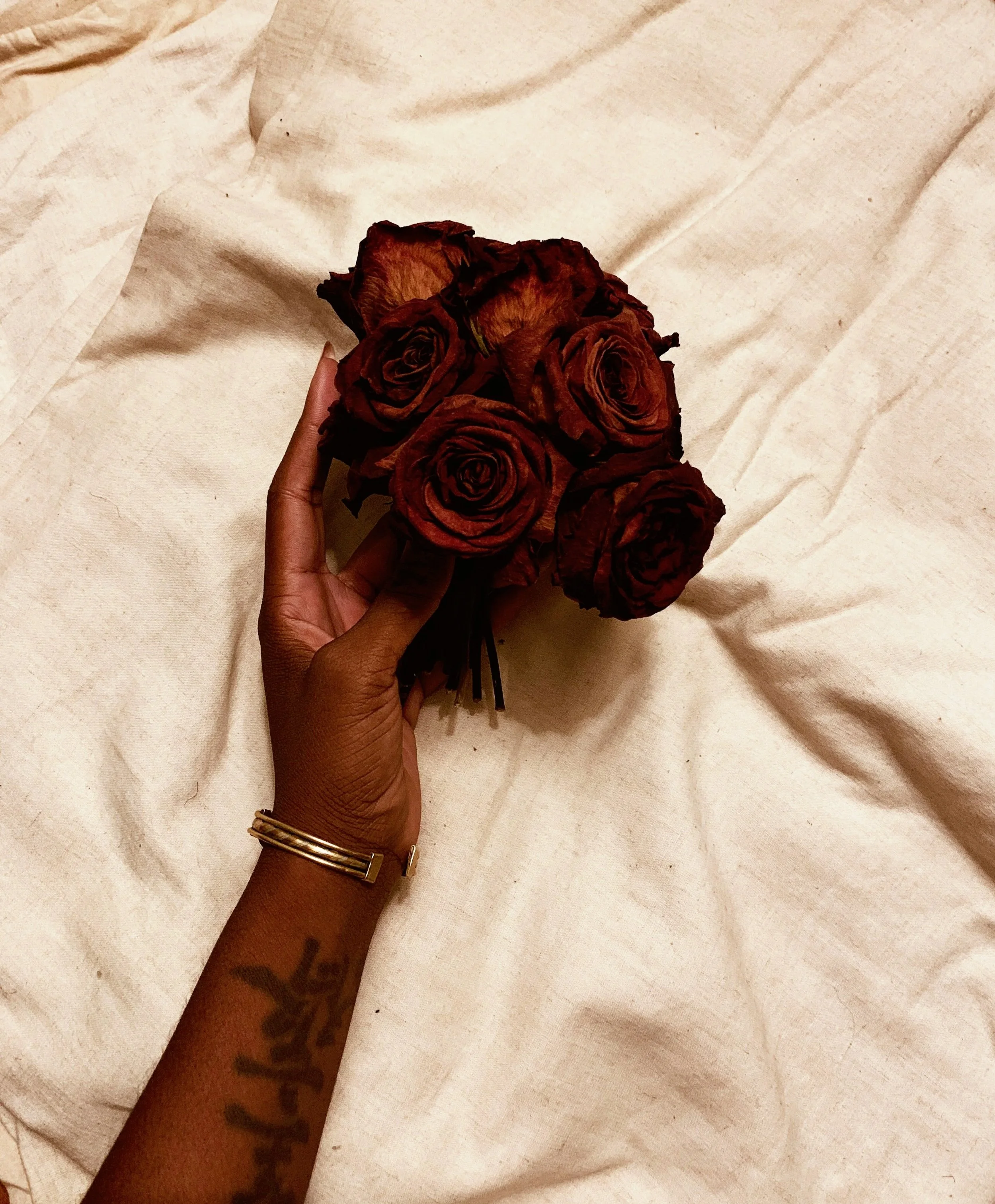
I believe we concern ourselves most with that which we most have, or that which we believe we do not have enough of.
I believe we concern ourselves most with what we deeply yearn for. For many of us, the most meaningful, and long-standing work, the kind that happens internally and in private, will revolve around bringing ourselves closer not just to what we need but what we yearn for, on intangible levels.
I have always been deeply concerned with love. When I started writing more about love, I felt for some time that, in the way of subject matters, it was a frivolous pursuit. I understand now this feeling was more of a reflection of the ways in which paradigms of love, and what we are taught about love, are so narrow and finite. In reality, the multifaceted nature and necessary role love plays, individually, communally, and spiritually, is beyond measure. Writing about love, exploring love, is anything but frivolous.
Love is purposed, and profound.
In it’s everyday use, and misuse, love can mean everything and nothing at the same time. In Diane Ackerman’s, ‘A Natural History of Love’, Ackerman writes, “We use love in such a sloppy way that it can mean almost nothing or absolutely everything.” In it’s most inherent and spiritual nature, love is purposed and profound. We cannot do without love in the same way we cannot breathe without air. We can, and many of us have, for long durations of our lives gotten by on fragments, or lacking of love, but overtime this malnourishment impacts our being, affects our emotional growth and development, detrimentally changes who and how we are, our bond and connection with one another, and our connection with ourselves.
Understanding, even without wholly experiencing that there are multitudes of love, opens us to deeper, more dimensional, and connected ways of being. Love, both our experiences and imaginations, invites us to think, act and move in a spirit of curiosity and consideration. Love keeps us open. Love keeps us attune and aware.
Loving is a skill.
While there may be certain aspects of loving we inherently know, loving is a skill, it takes lessons, and learning, practice, understanding and knowing. To be both loving and loved, requires our respect, reverence, and awe. Love is also a responsibility, we accept it by taking very seriously our role as love’s practitioners. Love requires that we study it, learn and explore it beyond flimsy and superficial postures, and shallow definitions. Too often, amidst our misunderstanding and misuse of love, we begin to believe that love is a play thing. When we play with love, or those we claim to love, we become the handlers of our own mishandling, mistreating others as we have been mistreated. This vicious cycling is emotionally and psychologically damaging. The damage often leads us to believing that love, and loving, is a kind of torment, or punishment.
One perspective on love which I have found deeply resonate comes from James Baldwin’s, ‘The Fire Next Time’.
“Love takes off the masks that we fear we cannot live without and know we cannot live within. I use the word "love" here not merely in the personal sense but as a state of being, or a state of grace - not in the infantile American sense of being made happy but in the tough and universal sense of quest and daring and growth.”
bell hooks’ literary classic ‘all about love’, served as my literary introduction to a more expansive and resonate definition of love. ‘all about love’ introduced me to the “love ethic” and hooks’ “ingredients” of love: care, affection, recognition, respect, commitment, trust and honest and open communication. It took an emotionally abusive relationship for me to learn that for some, respect and love are not mutually exclusive, and care and love are not always synonymous.
Understanding love as a recipe helped me affirm my already held belief that love, within the framework of external relationships, does and should have certain terms and conditions. ‘all about love’ also alerted me to contradictions of love — deceit, fear, abuse, force, power, neglect, dominance, and manipulation.
“Abuse and neglect negate love. Care and affirmation, the opposite of abuse and humiliation, are the foundation of love. No one can rightfully claim to be loving when behaving abusively.” — bell hooks
bell hooks, and a number of other writers have helped me broaden my understanding of love and loving, and how necessary it is in the nurturing of ourselves, the expanding of our lives, and the enhancement of our quality of life.
During a 1990 interview with Toni Morrison and broadcast journalist Bill Moyers, Morrison says,
“You know people say, ‘I didn’t ask to be born’. I think we did, and that’s why we’re here. We are here, and we have to do something nurturing that we respect before we go. We must. It is more interesting, more complicated, more intellectually demanding, and more morally demanding to love somebody, to take care of somebody, to make one other person feel good.” — ‘Toni Morrison: A Writer’s Work’, 1990 (time mark, 5:40)
Morrison goes on to discuss “thick” love – love that may be considered excessive and too much, a kind of love represented in her novel ‘Beloved’.
Bill Moyers: “How do we know when love is too thick?”. Morrison says,
Toni Morrison: “We don’t know [when love is too thick], we really don’t. That’s a big problem. We don’t know when to stop […] When is it too much, and when is it not enough. That is the problem of the human mind, and the soul. But we have to try that, we have to do that, and not doing it is so poor for the self. So poor for the mind. It’s so uninteresting to live without that. It has no risk, there’s no risk involved, and that just seems to make life not just livable but a gallant, gallant, event.”
I have always considered myself an over-lover. A result of loving, both romanticly and platonicly, too deeply and too many who were unable or unwilling, to give, receive, or reciprocate love in ways necessary to keeping a relationship sound. After much consideration, I have decided I am not an over-lover but my love is indeed thick. And thick love, regardless of those incapable of receiving or reciprocating it, will forever be deeply necessary.
“Love is a type of generational wealth we don’t talk nearly enough about". – Ken Miles
My Mother, affectionately known as the O.G. Judy, says, “We first learn our worth in the world through our families”. Family, blood and otherwise, help shape our initial definitions of love, kindness and care. My mother, as my first reflection of love, is the reason I know that love is a source, otherworldly in its power. Both in practice and in teachings, the love I know from and through her is one of the greatest gifts ever given to me.
Love is an eternal binding that, despite all that may be done to diminish its significance and distort its function, in effort to sever its ties, is unbreakable. Even in instances where love’s tether has been stretched and its bind has been weakened, love regenerates. Love challenges us, changes us, lifts us, fights for us, guides and nurtures us. Love helps us deepen and expand. Love anoints and heals. Love is both armor that protects and arms that hold. Where hate, violence, and abuse divides and separates us, love gathers us, tethers us to ourselves and to one another.
Love allows us to see and receive each other. Love reminds us that we are each other.
– ei